


NEWS
NEL MONDO….AUGURI 120 DI QUESTI GIORNI
By@Pierbattista Patrizia
By@Mirella Pierbattista BY@Elisa Nardocci Avv.
By@EXIBI
By@Redazione
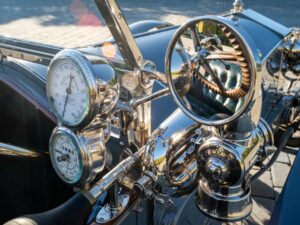
Rolls-Royce Motor Cars celebra il 120º anniversario della 40/50 H.P., l’automobilità che divenne nota come la Fantasma d’Argento e ha consolidato la reputazione del marchio per l’eccellenza ingegneristica, la raffinatezza e l’affidabilità. I suoi risultati nelle prove di resistenza e nelle competizioni internazionali sono ben documentati. I racconti di coloro che la possedevano e la incontrarono offrivano un’altra prospettiva: un’automobile ammirata dai commentatori contemporanei, affidata dai suoi proprietari e ricordata attraverso storie personali che rimangono parte della sua storia. Insieme, questi due aspetti aiutano a spiegare perché la Silver Ghost sia diventata così strettamente identificata con la stessa Rolls-Royce.
- La Rolls-Royce celebra i 120 anni dall’introduzione della 40/50 H.P. (Silver Ghost) nel 1906
- L’ingegneria di Henry Royce e la visione di Claude Johnson consolidarono la straordinaria reputazione del Silver Ghost
- I risultati ingegneristici hanno gettato le basi per la ‘migliore auto al mondo’ – una distinzione che ha giustamente detenuto per generazioni
- Il telaio 40/50 H.P. 1701, che raggiunse sia record di velocità che di efficienza nei consumi durante le prove Londra-Edimburgo del 1911, è attualmente esposto presso la casa della Rolls-Royce a Goodwood
Il Fantasma d’Argento occupa un posto speciale nella storia della Rolls-Royce. I suoi risultati ingegneristici hanno consolidato una reputazione di raffinatezza, affidabilità ed eccellenza straordinaria anche secondo gli standard odierni. Altrettanto straordinaria fu la reazione che suscitò tra chi lo vide e le aspettative che creò per la stessa Rolls-Royce. Centoventi anni dopo, queste aspettative continuano a definire gli standard a cui il marchio si impone.
Rolls-Royce Motor Cars celebra il 120º anniversario della 40/50 H.P., l’automobilità che divenne nota come la Fantasma d’Argento e ha consolidato la reputazione del marchio per l’eccellenza ingegneristica, la raffinatezza e l’affidabilità. I suoi risultati nelle prove di resistenza e nelle competizioni internazionali sono ben documentati. I racconti di coloro che la possedevano e la incontrarono offrivano un’altra prospettiva: un’automobile ammirata dai commentatori contemporanei, affidata dai suoi proprietari e ricordata attraverso storie personali che rimangono parte della sua storia. Insieme, questi due aspetti aiutano a spiegare perché la Silver Ghost sia diventata così strettamente identificata con la stessa Rolls-Royce.
LA CREAZIONE DI UNA LEGGENDA
Presentata per la prima volta al Salone dell’Automobile Olympia di Londra nel novembre 1906, la 40/50 H.P. fu tra le automobili più avanzate della sua epoca. Il suo motore sei cilindri fluido e l’eccezionale affidabilità riflettevano la determinazione di Henry Royce a superare i limiti meccanici dei primi motori. La sua attenzione meticolosa si estendeva a ogni aspetto dell’auto, dai componenti meccanici alla raffinatezza e alla tenuta di posto.
Claude Johnson, il primo Amministratore Generale Commerciale dell’azienda, universalmente noto come CJ, riconobbe l’importanza di dimostrare pubblicamente queste qualità. Diede alle singole automobili nomi distintivi, il più famoso fu il telaio 60551, che battezzava ‘Il Fantasma d’Argento’. Rifinita con verniciatura argentata e accessori placcati argento, questo particolare esemplare divenne così celebre che altri proprietari iniziarono a chiamare le loro automobili 40/50 H.P. Silver Ghosts. Col tempo, il nome arrivò a identificare tutte le Rolls-Royce di questo tipo.
Sotto la direzione di CJ, il Silver Ghost affrontò una serie di prove e competizioni impegnative. Dalla Scottish Reliability Trial e dalla celebre Tratta Londra-Edimburgo alla vittoria nel Gran Premio di Spagna e nella prova alpina austriaca, questi risultati fornirono prove convincenti della sua eccellenza ingegneristica.
Uno degli esempi più celebri è attualmente esposto presso la Home of Rolls-Royce a Goodwood. Il telaio 1701, soprannominato ‘The Sluggard’ da CJ, completò con successo la prova Londra-Edimburgo del 1911 con il cambio appositamente bloccato in marcia alta, superando i valori di consumo e velocità precedentemente raggiunti da Napier. Più tardi nello stesso anno, divenne la prima Rolls-Royce a superare i 100 mph.
In un’epoca in cui l’automobile era ancora una passione relativamente nuova, queste dimostrazioni pubbliche di affidabilità contribuirono a stabilire fiducia in Rolls-Royce tra i clienti che facevano un investimento sostanziale in un’automobile.
SECONDO LE PAROLE DI CHI LO CONOSCEVA
Press coverage from the period reveals the esteem in which the Silver Ghost was held. The Dundee Chronicle described Rolls-Royce as “a standard of design that is in a class of its own”, while Country Life called it “The quintessence of all that a car ought to be”.
The response from owners was equally emphatic. One client, having covered 30,000 miles on French roads without engine trouble, remarked in an account reproduced in Punch: “To send praise to Derby I suppose is tantamount to sending coals to Newcastle, but I should like to put on record my high appreciation of the car.”
Another owner, W. H. Johnson, expressed his admiration even more directly. In an interview with The Financial News, he declared: “I know there is now a perfect car.”
The Silver Ghost attracted owners from across the worlds of business, politics and culture. Among them were aviation pioneer and yachtsman Tommy Sopwith; Paris Singer, one of the sewing machine magnate’s 27 children; financier Baron Alfred de Rothschild; Lord Pirrie, chairman of the renowned shipbuilding firm Harland & Wolff; composer Sir Hubert Parry; Sir Winston Churchill; and American aviator and film producer Howard Hughes.
The marque also earned the confidence of royal households. In 1911, the Government of India ordered eight landaulette-bodied Silver Ghosts for use during the celebrations associated with King George V and Queen Mary’s visit to India. Rolls-Royce provided drivers for the occasion, reflecting the confidence placed in the marque to fulfil its duties with the utmost reliability and discretion at an event of exceptional national significance.
The acclaim of the press and the testimony of owners helped establish the Silver Ghost as ‘the best car in the world’ – a description first associated with Lord Montagu of Beaulieu that would become synonymous with Rolls-Royce itself.
A MORE PERSONAL CONNECTION
Beyond its public achievements, the Silver Ghost became part of the personal lives of its owners, whose experiences offer a more intimate perspective on its qualities.
Among them was the celebrated opera singer Dame Nellie Melba, who took delivery of her 1911 Silver Ghost, chassis 1500, at the Ritz Hotel in London. She subsequently used the motor car in Britain, France and Australia, where its comfort and dependability were particularly well suited to her extensive travels.
In Australia, Charles H. Angas gave his Silver Ghost the affectionate name ‘The Dreamer’, because his wife would regularly fall asleep while travelling in it. The name was a personal tribute to the smoothness and comfort for which the motor car had become renowned.
The Silver Ghost also played a part in the creation of another enduring Rolls-Royce symbol. Lord Montagu of Beaulieu’s Silver Ghost was the first motor car to carry the Spirit of Ecstasy, created by sculptor Charles Sykes and introduced as the official Rolls-Royce mascot in 1911.
A REPUTATION THAT ENDURES
The Silver Ghost’s qualities continued to be recognised long after production ended.
Writing in The Edwardian Rolls-Royce (Fasal & Goodman, 1994), the third Lord Montagu of Beaulieu reflected on what had distinguished the Silver Ghost from other motor cars of its era. He observed that it “offered technical sophistication without appearing too adventurous”, together with an extraordinary choice of coachwork. He described it as “light in appearance without being weak, fashionable without wild excess”, concluding: “The era of the Silver Ghost has now vanished, but it was one which set standards about quality and luxury that persist to this day.”
For many owners, the Silver Ghost remains a motor car to be driven and enjoyed. In 2013, 47 Silver Ghosts retraced the 1,800-mile route of the 1913 Alpine Trial, including chassis 1701 and one of the original team cars. In 2021, chassis 1701 once again completed the London-Edinburgh journey, with its gearbox locked in top gear, just as it had 110 years earlier.
These journeys demonstrate the durability of Henry Royce’s engineering and the continued enjoyment of motor cars built more than a century ago.
THE STANDARDS IT ESTABLISHED
The Silver Ghost did more than earn the description ‘the best car in the world’. It established expectations of refinement, reliability and excellence that became inseparable from the Rolls-Royce name. Those expectations have endured for 120 years and continue to be upheld in the motor cars created at the Home of Rolls-Royce at Goodwood today.
– ENDS –
FURTHER INFORMATION
- The Silver Ghost and its place in Rolls-Royce history: The 40/50 H.P. was introduced in 1906 and remained in production until 1925. During this period, 6,173 examples were built in Britain, with a further 1,703 produced at Rolls-Royce’s American factory in Springfield, Massachusetts. Ten armoured-car chassis were also delivered in 1927. The model was renowned for its smooth-running six-cylinder engine, exceptional reliability and versatility. Its chassis could accommodate a wide variety of coachwork, from formal limousines to open touring bodies, with suspension carefully matched to the intended configuration.
- Chassis 1701 e il processo Londra-Edimburgo: Costruito a Derby per le prove Londra–Edimburgo del 1911, il telaio 1701 fu guidato dal collaudatore sperimentale Rolls-Royce Ernest Hives. Con il cambio bloccato in marcia massima per tutta la durata, completò la prova a una velocità media di 19,59 mph e raggiunse un consumo superiore a 24 mpg. L’automobilità raggiunse successivamente i 78,2 mph in un test di velocità di mezzo miglio. Più tardi nello stesso anno, dotata di carrozzerie aerodinamiche, raggiunse 101,8 mph a Brooklands, diventando la prima Rolls-Royce a superare le 100 mph.
- Il Fantasma d’Argento in circostanze straordinarie: I telai Silver Ghost furono adattati per uso militare durante la Prima Guerra Mondiale, anche nelle auto blindate gestite da T. E. Lawrence, meglio conosciuto come Lawrence d’Arabia. Espresse la sua ammirazione per la loro affidabilità, descrivendoli come “più preziosi dei rubini”. La regina Maria di Romania utilizzò anche una Rolls-Royce in relazione al suo lavoro umanitario di supporto ai soldati feriti e agli ospedali militari durante la Prima Guerra Mondiale.
- Il fascino duraturo del Fantasma d’Argento: La longevità del 40/50 H.P. riflette gli standard ingegneristici stabiliti da Henry Royce. Molti esemplari sono sopravvissuti per più di un secolo e sono ancora in uso dai loro proprietari. Una rete di restauratori specializzati e organizzazioni automobilistiche storiche contribuisce inoltre a preservare il patrimonio del modello.